
How to Check for a Warrant in Seibert
Work from the paper, not a name-search site. A citation, summons, bond notice, or missed-hearing letter usually names Colorado County Court, District Court, or a municipal authority, and that label decides who can confirm a Seibert warrant and who can recall or quash it. Collect the full legal name, date of birth, filing year, and case or citation number, plus the event that may have been missed. Keep Social Security and driver's-license numbers out of unverified email.
- Read the issuing-court name and copy the case or citation number exactly.
- For a state-filed Seibert case, call the Kit Carson County Combined Court clerk at 719-346-5524 x3.
- If the notice names a municipal authority, ask the issuer or county staff to identify the current local clerk; no verified Seibert municipal channel was found.
- Call Sheriff Administration at 719-346-8934 when service, safe surrender, or law-enforcement custody is the issue.
- Ask what appearance, motion, payment, bond, or judicial action is required, then confirm the warrant status again after acting.
A docket event is only a clue about a possible Seibert warrant. It does not certify current status. The clerk or executing agency must confirm it.
Seibert Warrants Have No Online Town Route
Seibert posts no town website, police page, municipal court page, warrant list, citation lookup, or online payment route. That gap matters. Nobody should promise that a Seibert warrant can be cleared online, and the absence of pages does not mean no municipal process or warrant exists. When a Seibert matter reaches county law enforcement, the official Kit Carson County Sheriff overview is the routing source.
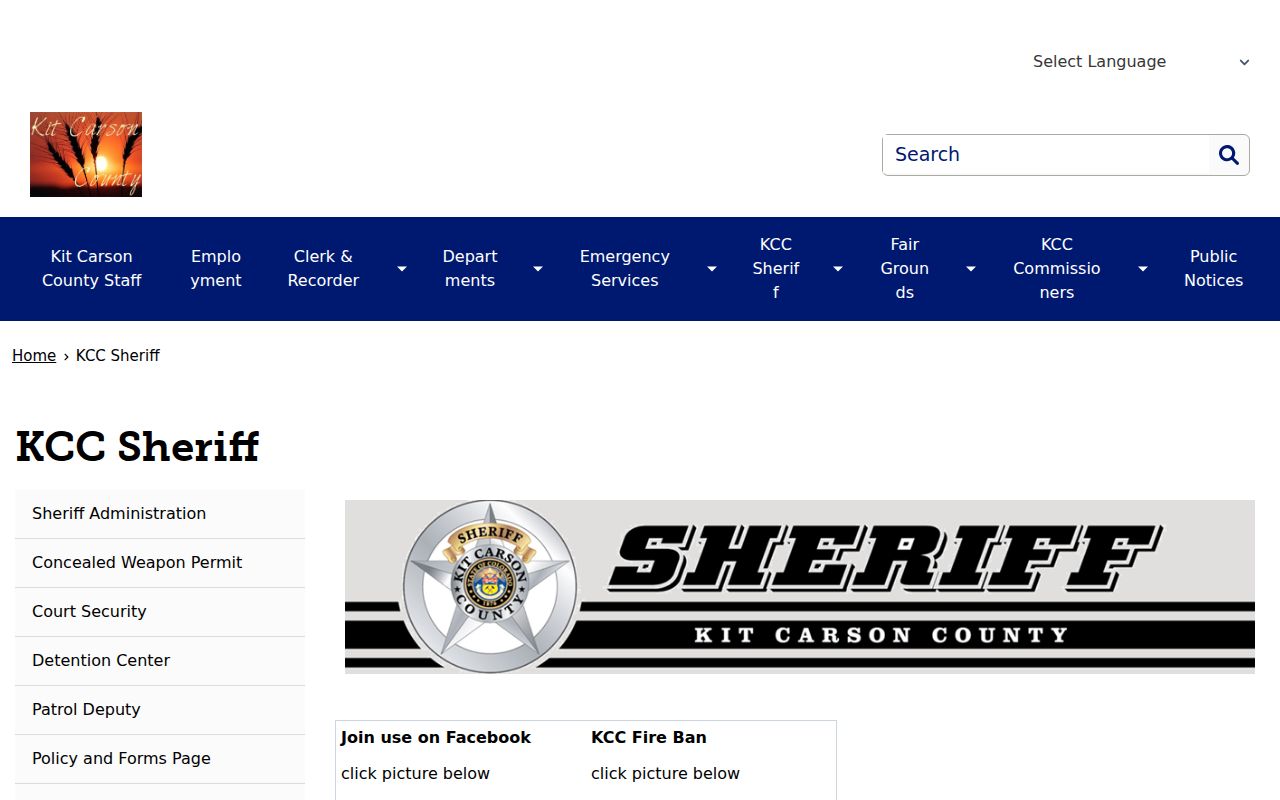
County service coverage is what that page documents, not a public Seibert warrant roster. Ask the Sheriff directly whether a releasable record exists, who is in custody, or whether the question goes back to the issuing court.
Local gap: Do not substitute a stale directory, commercial people-search result, or guessed Seibert court contact for official confirmation.
The Seibert Police Department and Municipal Court
Seibert has no verified police or municipal-court web presence. That leaves no reliable local judge, clerk, address, calendar, warrant line, or payment link to state. When a paper names a Seibert municipal authority, follow the contact information on that document, and ask county staff to identify the current municipal contact before paying anything or traveling.
Seibert Municipal Route
Use the issuing notice; no verified public town channel was found.
State Court Route
Kit Carson County Combined Court
719-346-5524 x3
The Combined Court clerk manages County Court and District Court files. The county Clerk & Recorder does not handle court warrants. Sheriff deputies can serve a warrant, but only the issuing judge controls recall, quash, and the next setting.
Seibert Warrant Notices Control the Route
The heading on the paperwork, County Court, District Court, or a municipal name, matters more than where the ticket was written. County Court usually takes traffic infractions, misdemeanors, and felony complaints; District Court handles felony proceedings; a confirmed municipal warrant stays with the issuing city authority. Location alone never decides jurisdiction. When you call, share only the identifiers the office requests through its official channel, then ask whether the Seibert warrant is open, what triggered it, whether bond is set, where the person must report, and what the judge requires next. Write down the staff member's office, the date, and the instruction. Staff can explain procedure but cannot predict a judge's decision, and details about another adult relative may be limited or need that person's authorization. This careful reading prevents the costliest Seibert mistake, driving to Burlington only to find the wrong office, and it prevents paying a balance that never addresses a separate appearance duty.
Types of Seibert Warrants
A warrant's name points to the responsible court and the unresolved event behind it. Colorado sources use bench warrant, failure-to-appear warrant, arrest warrant, and Outstanding Judgment Warrant. No local source treats capias pro fine as the controlling term. A summons is not a warrant, and a search warrant authorizes a search, not a person's arrest.
| Warrant Type | How It Arises | Who Issues It |
|---|---|---|
| County traffic FTA | A required traffic appearance is missed | Kit Carson County Court |
| Municipal bench warrant | A local appearance or order is missed, if a municipal case is confirmed | Issuing municipal judge |
| Arrest warrant | Probable-cause proceedings authorize arrest | County or District Court judge |
| Outstanding Judgment Warrant | A state-court judgment enters the collections process | State court, with District 13 collections routing |
A payment receipt does not prove recall by itself. Only the issuing court can say whether a Seibert warrant has been recalled, quashed, served, or is still active.
Seibert Warrant Travel Starts With a Call
The Kit Carson County Combined Court sits at 1650 Donelan Avenue, Suite 301, in Burlington. Reach the clerk at 719-346-5524 x3 or kitcarsonclerksoffice@judicial.state.co.us. Ask whether the person should report to the clerk, the Sheriff, or the jail, and whether a judge has set bond. County traffic and misdemeanor sessions run the first and third Tuesdays at 9:00 a.m., but a calendar pattern is not permission to appear without case-specific instructions. The secure courthouse uses the south entrance and electronic screening, so leave prohibited items outside. Confirm the destination before leaving Seibert, especially for a surrender, same-day hearing, or bond. An attorney can help interpret an arrest warrant or a case with uncertain stakes. Note: A published court session does not replace a clerk-confirmed appearance date for a specific Seibert warrant.
What a Seibert Warrant Record Shows
Seibert warrant information can sit in a citation, court order, Register of Action, docket event, bond paper, service return, or collections entry. A Colorado-style identifier might look like 2026CR00001, but use only the exact number on the official document. Read the issuing court and current status before trusting an amount or an old event date.
| Case or Citation Number | Links the inquiry to the correct municipal, County Court, or District Court file. |
|---|---|
| Subject Name and DOB | Help distinguish similar names, subject to privacy and release limits. |
| Charge or Event | May identify an alleged offense, missed appearance, order, or unpaid judgment. |
| Issuing Court | Names the clerk and judge with authority over the warrant. |
| Bond or Balance | May show a judge-set bond or a collections amount; verify before paying. |
| Status and Dates | May show issued, served, active, recalled, quashed, and the next setting. |
An old Seibert warrant record can stay visible long after later action. A fresh call to the issuing clerk ties the paper trail to the case's status today.
Seibert Warrant Records Use Two Forms
Seibert court papers travel one road, and Sheriff-held records travel another. The Colorado Judicial record request form covers court documents. It can request a Register of Action, a complaint or information, a disposition or sentence, a ticket, a protection order, a judgment document, or another named item. The Seibert form has no warrant checkbox. List the case number if you have it. Add the case type, year, county, party name, and date of birth where they apply. For a Seibert warrant record the Sheriff already holds, use the county's CORA process instead. Name the agency, record type, and date range precisely. The two Seibert requests reach different custodians, and neither guarantees live status. The court form generally promises a three-business-day response absent extenuating circumstances. The county's CORA policy generally runs three working days after receipt, with an extension in qualifying circumstances. Fees and redaction rules differ too. So for a Seibert warrant, do two things. Request the underlying record, and separately ask the issuing office to confirm current status. A Register of Action can explain history, but it is not a clearance letter.
Where Seibert Warrants Fit With Kit Carson County
A Seibert municipal matter stays with its own issuing authority. State-filed matters route to Kit Carson County Court or District Court. Sheriff deputies may execute a Seibert warrant, but only the issuing judge can recall or quash it. Colorado has no public statewide active-warrant database.
Warrant flow: Seibert issuing authority › Kit Carson County Sheriff when service is involved › issuing court confirmation.
The Kit Carson County warrant records overview maps the whole court-and-Sheriff system. The county warrant search route digs into official court records and docket checks. For Seibert, find the issuing office first.
Seibert Warrant Custody Needs Separate Calls
Sheriff Administration at 719-346-8934 handles Seibert front-office, records, and service routing. Dispatch at 719-346-9325 takes active law-enforcement communications. The jail at 719-346-7006 answers custody and bond questions. None of these doubles as a Seibert warrant-search line. If a Seibert defendant is already in custody, the county says bonds can be posted at the Sheriff's Office around the clock. Cash, money order, and credit card are listed. Credit cards carry a 3% fee. The judge sets the bond type and amount. Confirm the defendant, case, amount, and permitted method with the jail before using any remote payment form. The county cannot recommend a bondsman. If an unpaid judgment is involved, ask whether 13th District Collections applies and whether an Outstanding Judgment Warrant or a separate appearance obligation remains. Payment may solve a balance without solving every court duty. Follow up with the clerk on the Seibert case. Note: Call ahead for safe reporting instructions, and do not appear at a law-enforcement counter based only on an old Seibert record.
Public Access to Seibert Warrant Records
Seibert access turns on three things. It depends on the custodian, the record type, and the legal status. Court records follow Colorado Judicial access rules. Existing Sheriff records may fall under CORA and criminal-justice-record provisions. Sealed, suppressed, protected, restricted, or juvenile material can be withheld, and a name alone will not open a restricted Seibert warrant record.
Key Rules:
Colorado Open Records Act, C.R.S. §§24-72-201 through 24-72-206 governs existing public records held by local custodians.
C.R.S. §16-2-110 addresses a failure-to-appear bench warrant after a summons, subject to current law and the case.
C.R.S. §19-2.5-204 addresses juvenile-warrant procedure and its separate confidentiality treatment.
The CJD 05-01 public-access directive sorts court information into public, remote, sealed, suppressed, protected, restricted, compiled, and aggregate tiers. Remote access still builds no statewide Seibert warrant table.
Seibert Warrant Resolution Needs Proof
Keep a short Seibert confirmation log. Write down the issuing office, case number, call date, staff instructions, any payment or appearance deadline, and the promised proof of completion. After any appearance, payment, bond, motion, or records response, call the Seibert court again. Ask whether the warrant is active, served, recalled, quashed, or replaced by a new setting. Keep receipts, notices, and appearance confirmations. An online payment screen shows that money moved. It does not show that a judge acted. A Sheriff's record may document service without resolving the court case. A docket shows history, not live status. Each document answers a different question. Seibert lacks a verified municipal portal. Written follow-through shows which Seibert authority was contacted and what remains due. If the clerk cannot confirm the next step for a Seibert case, ask what official document or attorney contact is right instead of guessing.
Final check: Do not rely on a receipt or stale docket alone; confirm current status with the issuing court.